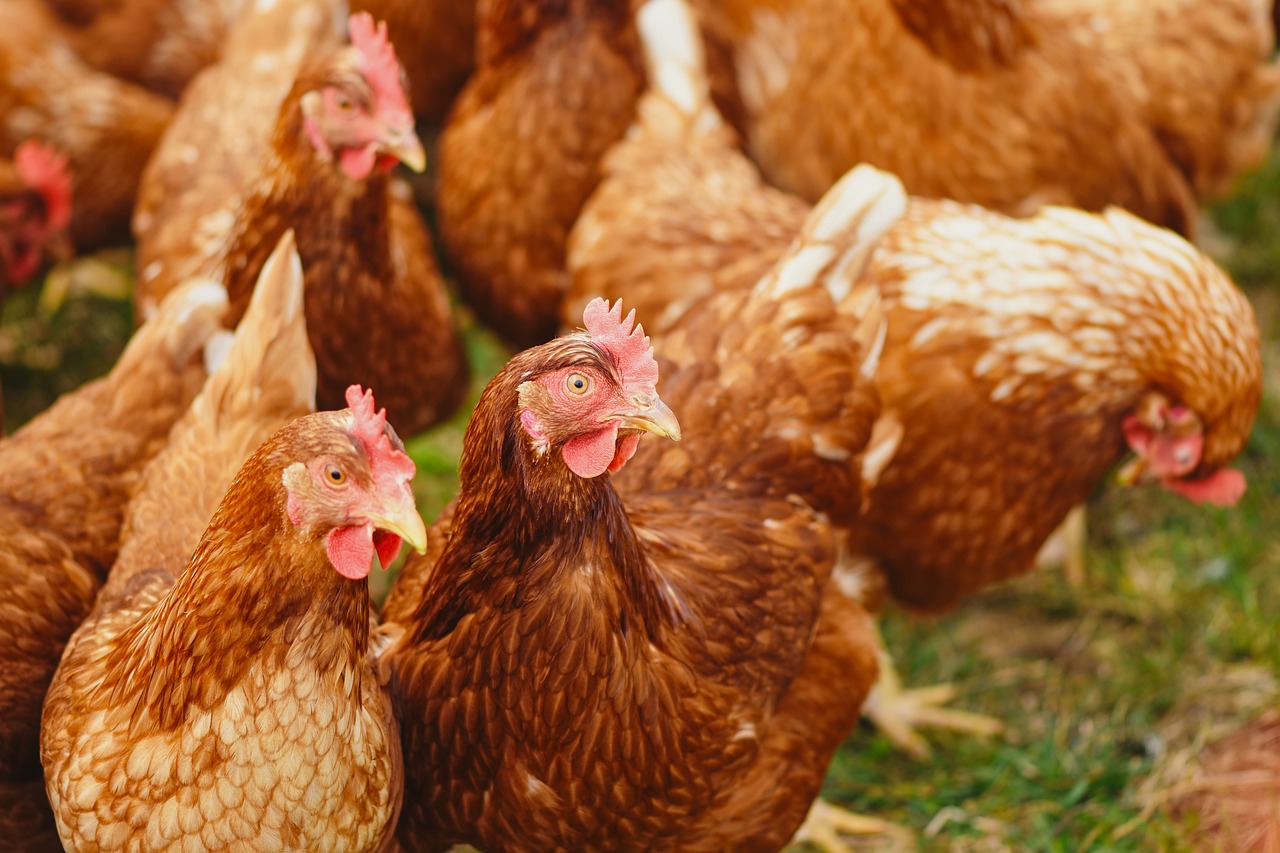
1. Coccidiosis (Eimeria spp.)
Symptoms: Bloody or watery diarrhea, Ruffled feathers, weakness, and reduced appetite, Pale comb and wattles, Poor weight gain and stunted growth
Prevention: Biosecurity, vaccination, anticoccidial drugs in feed/water and dry litter management.
2. Newcastle Disease (ND) (Paramyxovirus)
Symptoms: Respiratory distress (gasping, coughing, sneezing), Twisted neck (torticollis), paralysis, Drop in feed and water intake, Greenish diarrhea and Sudden death
Prevention: Vaccination (live and killed vaccines), strict biosecurity.
3. Infectious Bursal Disease (IBD / Gumboro) (Birnavirus)
Symptoms: Swollen bursa of Fabricius, Weakness, ruffled feathers, Watery or white diarrhea, High mortality, especially in young birds
Prevention: Vaccination at 10–14 days, strict hygiene.
4. Infectious Bronchitis (IB) (Coronavirus)
Symptoms: Sneezing, gasping, nasal discharge, Watery eyes, swollen sinuses, Reduced feed intake, Soft-shelled or misshapen eggs in layers
Prevention: Vaccination, good ventilation, biosecurity.
5. Avian Influenza (Bird Flu) (Influenza A virus)
Symptoms: Sudden high mortality, Swelling of the head, comb, and wattles, Coughing, sneezing, difficulty breathing, Greenish diarrhea, Nervous signs (tremors, twisted neck)
Prevention: Biosecurity, restricted farm entry, vaccination in endemic areas.
6. Salmonellosis (Pullorum and Fowl Typhoid) (Salmonella spp.)
Symptoms: White pasty diarrhea, Weakness, poor growth, Swollen joints, Sudden death in severe cases
Prevention: Clean hatchery and farm environment, vaccination, antibiotics under vet guidance.
7. Mycoplasmosis (Chronic Respiratory Disease) (Mycoplasma gallisepticum)
Symptoms: Coughing, sneezing, nasal discharge, Swollen eyes and face, Reduced weight gain and feed conversion, Egg production drop in layers
Prevention: Vaccination, antibiotics, improved ventilation.
8. Fowl Cholera (Pasteurella multocida)
Symptoms: Sudden death in severe cases, Swollen wattles and joints, Green or yellow diarrhea, Respiratory distress
Prevention: Vaccination, biosecurity, proper sanitation.
9. Marek’s Disease (Herpesvirus)
Symptoms: Paralysis of legs and wings, Weight loss, ruffled feathers, Tumors in organs (advanced stage)
Prevention: Vaccination at hatchery, genetic resistance breeding.
10. Necrotic Enteritis (Clostridium perfringens)
Symptoms: Sudden death, Bloody or dark-colored diarrhea, Weakness, depression, Dehydration and reduced feed intake
Prevention: Good litter management, probiotics, antibiotics under veterinary supervision.