

 Member
 Md.Mizanor
MemberForum Replies Created
-

Genetics fundamentally influence poultry growth rates and egg production through selective breeding for desired traits, identifying genes that control hormonal regulation, appetite, muscle and fat development, and ovarian function, and the use of genetic markers to accelerate improvement.
-
How can you ensure the freshness of eggs before use?
-
The effect of keeping males and females together or separate depends entirely on the context, which can include social settings, animal husbandry, biological research, or public health, and there is no universal answer. In human contexts, separation can sometimes be beneficial to prevent unwanted behaviors or promote specific outcomes, while together can be necessary for social development or family units. In animal husbandry, the decision depends on whether the goal is breeding or managing aggressive social dynamics. In biology, separation is often crucial for studying the inherent biological differences between sexes.
-
Ammonia is commonly used to control Eimeria oocysts or coccidiosis in litter, or the floor is burned.
-
What are the nutritional requirements of broilers and layers?
-
Ideal sieve sizes are smaller for young broiler pre-starters (e.g., 1.5–3 mm) and gradually increase for finishers (e.g., 3–7 mm)
-

Apart from disease,s some of non non-diseases cause
🐥 Types of Feed Refusal in Broilers
1️⃣ Dietary Feed Refusal
-
Triggered by nutrient imbalances, mycotoxins, mineral excesses, or poor feed/water access.
-
Typically affects all flocks uniformly.
-
Linked to formulation errors, anti-nutritional factors, or energy-density mismatches.
2️⃣ Sensory Feed Refusal
-
Caused by poor pellet texture, excessive hardness, dryness, or unappealing physical traits.
-
Affects specific flocks or farms, often batch-dependent.
-
Driven by feed recognition and prehension issues due to visual and tactile cues.
3️⃣ Transient Feed Refusal
-
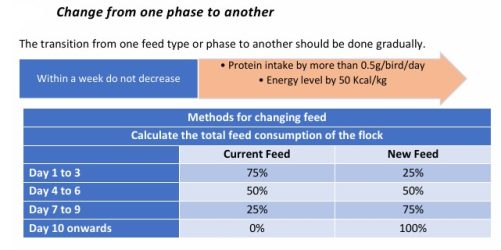
Short-term reluctance during feed transitions (e.g., crumbs to pellets).
-
Often resolves within 24 hours with compensatory feeding.
-
Can be minimized by gradual pellet introduction (e.g., 5% pellets in crumbs, 50:50 mix).
-
-
🥚 Key Layer Strains for Egg Production
-
BV 300 (ISA Brown variant)
-
High brown egg yield
-
Excellent feed conversion and adaptability
-
Widely used in tropical and semi-intensive systems
-
-
Hy-Line W-36
-
White egg layer
-
Known for superior persistency and low feed intake
-
Ideal for high-density commercial operations
-
-
Lohmann LSL Classic
-
White egg producer with strong shell quality
-
High peak production and longevity
-
Popular in both cage and alternative housing systems
-
-
-
Feed Transition Guidelines by BV300 Std
-
Attached the Cost Economic Sample Format, hope it works.