

 Member
 Fatima
MemberForum Replies Created
-

if the active ingredient doesnt work against each other,there wont be issue.however its preferably to use one at time to evaluate the reaction.
-

Are layer requirements metioned here for particular breed, like Broielr specifications says for Cobb
-

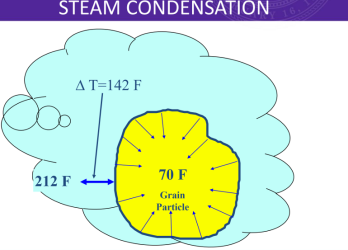
Conditioning is the pre-pelleting process that prepares mash feed for optimal pellet formation. It hinges on three core factors:
⏱️ Time
-
Conditioner Length: Longer conditioners allow more residence time for heat and moisture penetration.
-
Conditioner Speed: Slower RPM increases retention time but may affect throughput.
-
Pick Setup: Influences mixing intensity and flow resistance—critical for uniform conditioning.
💧 Moisture
-
Steam: Primary source of moisture and heat. Quality (dry vs. wet steam) affects conditioning efficiency.
-
Water: Sometimes added to adjust moisture levels, especially when steam alone is insufficient.
🔥 Heat
-
Steam again: Dual role—moisture carrier and heat source. Target temperature typically ranges from 75–85°C depending on formulation and species.
-
-

Udumula Kranthi kumar
MemberOctober 15, 2025 at 5:10 am in reply to: shrinkage percentage of corn grainsgood information
-

Of course. This is a complex question because the exact shrinkage percentage depends on the final moisture content the grain achieves, which is determined by the storage conditions.
However, based on the principles of grain equilibrium moisture content (EMC), we can provide a strong estimate.
The expected shrinkage for corn stored at 15% moisture under your stated conditions (35–49°C and 60–70% Relative Humidity) is approximately 1.5% to 3.0% by weight.
Here is a breakdown of why:
1. The Key Concept: Equilibrium Moisture Content (EMC)
Grains are hygroscopic; they gain or lose moisture until they are in balance with the temperature and relative humidity of the air surrounding them.
· Your initial moisture is 15%.
· Your storage conditions (~35°C & ~65% RH) have an EMC for corn of about 12.5% – 13.5%.
This means the corn will slowly lose moisture until it reaches this lower level.
2. The Shrinkage Calculation
Shrinkage is calculated based on the amount of water lost.
Formula: Shrinkage (%) = (Initial Moisture – Final Moisture) / (100 – Final Moisture) * 100
Let’s calculate for a final moisture of 13.0%:
Shrinkage= (15 – 13) / (100 – 13) * 100
=(2) / (87) * 100
=2.3%
Using this formula:
· Shrinking to 12.5% results in ~2.9% weight loss.
· Shrinking to 13.5% results in ~1.7% weight loss.
This gives us the range of 1.7% to 2.9%, which we can round to ~1.5% to 3.0% to be safe.
Critical Considerations & Risks
1. Mold & Spoilage Risk: This is a major concern. Storing corn at 35–49°C is dangerously high. While the low humidity helps dry it, any hotspots or moisture condensation (from temperature fluctuations) can lead to rapid mold growth, which would cause much higher losses than the simple moisture shrinkage.
2. Air Flow (Aeration): The rate and uniformity of drying depend entirely on whether the silo has aeration. Without it, the grain will not reach a uniform moisture level, and the risk of spoilage skyrockets.
3. Temperature Fluctuations: The wide temperature range (35–49°C) can cause moisture migration within the silo, leading to wet spots and spoilage.
In summary: While the expected moisture loss shrinkage is around 1.5-3.0%, the actual total losses in your scenario are likely to be higher due to the significant risk of spoilage in such warm storage conditions. Proper aeration is critical to managing this risk.Of course. This is a complex question because the exact shrinkage percentage depends on the final moisture content the grain achieves, which is determined by the storage conditions.
However, based on the principles of grain equilibrium moisture content (EMC), we can provide a strong estimate.
The expected shrinkage for corn stored at 15% moisture under your stated conditions (35–49°C and 60–70% Relative Humidity) is approximately 1.5% to 3.0% by weight.
Here is a breakdown of why:
1. The Key Concept: Equilibrium Moisture Content (EMC)
Grains are hygroscopic; they gain or lose moisture until they are in balance with the temperature and relative humidity of the air surrounding them.
· Your initial moisture is 15%.
· Your storage conditions (~35°C & ~65% RH) have an EMC for corn of about 12.5% – 13.5%.This means the corn will slowly lose moisture until it reaches this lower level.
2. The Shrinkage Calculation
Shrinkage is calculated based on the amount of water lost.
Formula: Shrinkage (%) = (Initial Moisture – Final Moisture) / (100 – Final Moisture) * 100
Let’s calculate for a final moisture of 13.0%:
Shrinkage= (15 – 13) / (100 – 13) * 100
=(2) / (87) * 100
=2.3%Using this formula:
· Shrinking to 12.5% results in ~2.9% weight loss.
· Shrinking to 13.5% results in ~1.7% weight loss.This gives us the range of 1.7% to 2.9%, which we can round to ~1.5% to 3.0% to be safe.
Critical Considerations & Risks
1. Mold & Spoilage Risk: This is a major concern. Storing corn at 35–49°C is dangerously high. While the low humidity helps dry it, any hotspots or moisture condensation (from temperature fluctuations) can lead to rapid mold growth, which would cause much higher losses than the simple moisture shrinkage.
2. Air Flow (Aeration): The rate and uniformity of drying depend entirely on whether the silo has aeration. Without it, the grain will not reach a uniform moisture level, and the risk of spoilage skyrockets.
3. Temperature Fluctuations: The wide temperature range (35–49°C) can cause moisture migration within the silo, leading to wet spots and spoilage.In summary: While the expected moisture loss shrinkage is around 1.5-3.0%, the actual total losses in your scenario are likely to be higher due to the significant risk of spoilage in such warm storage conditions. Proper aeration is critical to managing this risk.
-
Appreciated
-
1. Housing & Environment Management
· Insulation & Reflective Roofing: Proper insulation in the roof prevents radiant heat from the sun from entering. Painting the roof white reflects sunlight.
· Advanced Ventilation: Use tunnel ventilation to create a “wind chill” effect, effectively cooling the birds. Cooling pads (evaporative cooling) at the air inlets dramatically lower the air temperature inside the house.
· Reduce Stocking Density: Temporarily thinning the flock gives birds more space to dissipate body heat and improves air circulation.
2. Nutritional & Water Strategies
· Feed Management: Feed birds during the cooler parts of the day (early morning or night). Digestion generates body heat, so avoid feeding during the peak heat.
· Adjust Diet Formula: Increase energy density (by adding fats/oils) and reduce crude protein (with supplemental amino acids) to minimize the metabolic heat produced from digestion.
· Cool, Clean Water: Ensure water lines are shaded or buried so water remains cool. Add extra waterers and check water pressure to encourage drinking.
3. Bird-Centric Interventions
· Supplementation: Add electrolytes (like potassium, sodium) to drinking water to help maintain the bird’s acid-base balance. Vitamins C & E can help birds cope with the physiological stress.
· Genetic Selection: Source breeds from companies that are selectively breeding for heat tolerance and robust health, not just maximum growth rate.
Implementing these practices helps maintain bird welfare, performance, and profitability during hot weather.
1. Housing & Environment Management· Insulation & Reflective Roofing: Proper insulation in the roof prevents radiant heat from the sun from entering. Painting the roof white reflects sunlight.
· Advanced Ventilation: Use tunnel ventilation to create a “wind chill” effect, effectively cooling the birds. Cooling pads (evaporative cooling) at the air inlets dramatically lower the air temperature inside the house.
· Reduce Stocking Density: Temporarily thinning the flock gives birds more space to dissipate body heat and improves air circulation.2. Nutritional & Water Strategies
· Feed Management: Feed birds during the cooler parts of the day (early morning or night). Digestion generates body heat, so avoid feeding during the peak heat.
· Adjust Diet Formula: Increase energy density (by adding fats/oils) and reduce crude protein (with supplemental amino acids) to minimize the metabolic heat produced from digestion.
· Cool, Clean Water: Ensure water lines are shaded or buried so water remains cool. Add extra waterers and check water pressure to encourage drinking.3. Bird-Centric Interventions
· Supplementation: Add electrolytes (like potassium, sodium) to drinking water to help maintain the bird’s acid-base balance. Vitamins C & E can help birds cope with the physiological stress.
· Genetic Selection: Source breeds from companies that are selectively breeding for heat tolerance and robust health, not just maximum growth rate.Implementing these practices helps maintain bird welfare, performance, and profitability during hot weather.
-
Muhammad Ahmad
MemberOctober 15, 2025 at 3:32 am in reply to: Feed form consistency & bird performanceYes, switching from mash to pellets/crumble significantly improves broiler performance.
· Better Growth & Efficiency: Birds gain weight faster on less feed (improved FCR).
· Less Waste: Pellets prevent selective eating and reduce feed dust.
· Ideal Progression: Start chicks on crumble, then switch to pellets for grow-out.
The main downside is the higher cost of processing the feed.Yes, switching from mash to pellets/crumble significantly improves broiler performance.
· Better Growth & Efficiency: Birds gain weight faster on less feed (improved FCR).
· Less Waste: Pellets prevent selective eating and reduce feed dust.
· Ideal Progression: Start chicks on crumble, then switch to pellets for grow-out.The main downside is the higher cost of processing the feed.
-
The nutritional requirements of broilers and layers differ significantly because their metabolic goals are completely opposite: Broilers are optimized for rapid muscle (meat) gain, while Layers are optimized for sustained egg production and longevity.
Here is a brief comparison of their key nutritional needs:
| Nutrient | Broilers (Meat Production) | Layers (Egg Production) |
|—|—|—|
| Primary Goal | Maximizing growth rate and feed-to-meat conversion. | Maximizing egg mass (number and size) and skeletal integrity. |
| Metabolizable Energy (ME) | Very High (e.g., 3,000 – 3,200 \text{kcal/kg} in starter) to fuel rapid tissue growth. | Moderate (e.g., 2,750 – 2,900 \text{kcal/kg}) to maintain weight without obesity. |
| Crude Protein (CP) | Higher (e.g., 20\% – 24\% in starter) to support explosive muscle development. | Moderate (e.g., 16\% – 18\% in layer phase) to support albumen (egg white) formation and body maintenance. |
| Key Amino Acids | High requirements for Lysine and Methionine (used for muscle synthesis and feathering). | High requirements for Methionine (critical for egg size and production). |
| Calcium (\text{Ca}) | Low to Moderate (e.g., \approx 1\%) for bone growth, balanced with Phosphorus. | Very High (e.g., 3.5\% – 4.5\%) to supply the large amount needed for eggshell formation. |
| Phosphorus (\text{P}) | Requires a specific \text{Ca}:\text{P} ratio (e.g., 2:1) for bone development. | Lower requirement for growth, but still vital for general health and bone reserves. |
| Vitamins | High requirement for Vitamin \text{D}_3 for bone development to support heavy weight. | High requirements for Vitamins \text{A} and \text{D}_3 for reproduction, immunity, and efficient \text{Ca} utilization. |The nutritional requirements of broilers and layers differ significantly because their metabolic goals are completely opposite: Broilers are optimized for rapid muscle (meat) gain, while Layers are optimized for sustained egg production and longevity.
Here is a brief comparison of their key nutritional needs:
| Nutrient | Broilers (Meat Production) | Layers (Egg Production) |
|—|—|—|
| Primary Goal | Maximizing growth rate and feed-to-meat conversion. | Maximizing egg mass (number and size) and skeletal integrity. |
| Metabolizable Energy (ME) | Very High (e.g., 3,000 – 3,200 \text{kcal/kg} in starter) to fuel rapid tissue growth. | Moderate (e.g., 2,750 – 2,900 \text{kcal/kg}) to maintain weight without obesity. |
| Crude Protein (CP) | Higher (e.g., 20\% – 24\% in starter) to support explosive muscle development. | Moderate (e.g., 16\% – 18\% in layer phase) to support albumen (egg white) formation and body maintenance. |
| Key Amino Acids | High requirements for Lysine and Methionine (used for muscle synthesis and feathering). | High requirements for Methionine (critical for egg size and production). |
| Calcium (\text{Ca}) | Low to Moderate (e.g., \approx 1\%) for bone growth, balanced with Phosphorus. | Very High (e.g., 3.5\% – 4.5\%) to supply the large amount needed for eggshell formation. |
| Phosphorus (\text{P}) | Requires a specific \text{Ca}:\text{P} ratio (e.g., 2:1) for bone development. | Lower requirement for growth, but still vital for general health and bone reserves. |
| Vitamins | High requirement for Vitamin \text{D}_3 for bone development to support heavy weight. | High requirements for Vitamins \text{A} and \text{D}_3 for reproduction, immunity, and efficient \text{Ca} utilization. | -

well explained. Thanks
-
Yes, That’s yet another myth. Egg color is only due to the shell pigments which do not have any nutritional significance.
– Dr Malathi