 Member
 Ibrahim Jaji
MemberForum Replies Created
-

For those who might not have access to high-tech solutions like in-ovo feeding, what are some effective, low-cost strategies we can implement at the farm level to get nutrients into chicks as quickly as possible after they arrive?
-

Mycotoxins have a <strong data-start=”18″ data-end=”49″>significant negative impact on poultry immunity, weakening both the <strong data-start=”90″ data-end=”100″>innate and <strong data-start=”105″ data-end=”117″>adaptive immune systems. Here’s how they affect immunity in birds:
-
<strong data-start=”182″ data-end=”210″>Damage to immune organs:
<ul data-start=”216″ data-end=”459″>
-
Mycotoxins such as <em data-start=”237″ data-end=”251″>aflatoxin B1 cause <strong data-start=”258″ data-end=”269″>atrophy (shrinkage) of the <strong data-start=”289″ data-end=”331″>thymus, bursa of Fabricius, and spleen, which are key organs for immune cell production.
-
This reduces the number and function of lymphocytes (T and B cells).
-
<strong data-start=”464″ data-end=”499″>Suppressed antibody production:
<ul data-start=”505″ data-end=”710″>
-
Birds exposed to mycotoxins produce <strong data-start=”543″ data-end=”563″>fewer antibodies in response to vaccines (like NDV or IBD vaccines).
-
This leads to <strong data-start=”637″ data-end=”664″>poor vaccine protection and increased susceptibility to infections.
-
<strong data-start=”715″ data-end=”747″>Reduced phagocytic activity:
<ul data-start=”753″ data-end=”894″>
-
Mycotoxins impair <strong data-start=”773″ data-end=”804″>macrophages and heterophils, the first line of defense cells, making birds less able to destroy invading pathogens.
-
<strong data-start=”899″ data-end=”937″>Oxidative stress and inflammation:
<ul data-start=”943″ data-end=”1093″>
-
Mycotoxins increase <strong data-start=”965″ data-end=”998″>reactive oxygen species (ROS), leading to oxidative damage and chronic inflammation that further suppress immune function.
-
<strong data-start=”1098″ data-end=”1135″>Increased disease susceptibility:
<ul data-start=”1141″ data-end=”1263″>
-
Birds become more prone to <strong data-start=”1170″ data-end=”1216″>viral, bacterial, and parasitic infections such as coccidiosis, salmonellosis, and NDV.Mycotoxins have a significant negative impact on poultry immunity, weakening both the innate and adaptive immune systems. Here’s how they affect immunity in birds:
Damage to immune organs:
Mycotoxins such as aflatoxin B1 cause atrophy (shrinkage) of the thymus, bursa of Fabricius, and spleen, which are key organs for immune cell production.
This reduces the number and function of lymphocytes (T and B cells).
Suppressed antibody production:
Birds exposed to mycotoxins produce fewer antibodies in response to vaccines (like NDV or IBD vaccines).
This leads to poor vaccine protection and increased susceptibility to infections.
Reduced phagocytic activity:
Mycotoxins impair macrophages and heterophils, the first line of defense cells, making birds less able to destroy invading pathogens.
Oxidative stress and inflammation:
Mycotoxins increase reactive oxygen species (ROS), leading to oxidative damage and chronic inflammation that further suppress immune function.
Increased disease susceptibility:
Birds become more prone to viral, bacterial, and parasitic infections such as coccidiosis, salmonellosis, and NDV.
-
-
- Traceability and Digitalization: “Beyond basic regulatory requirements, what are the most valuable ways members are using digital traceability tools to enhance quality control and inventory management within the mill?”
-
- Preventative Maintenance Tech: “What predictive or preventative maintenance technologies (e.g., vibration analysis, thermal imaging) are members finding most effective for reducing unexpected downtime in their pellet mills or mixers?”
-
- Energy Use in Milling: “With rising energy costs, what are the most effective, practical methods the community is using to reduce the energy consumption (kWh/ton) in the actual grinding and pelleting phases of feed milling?
-
- Optimization of Soy Inclusion: “What is the latest research or technique being adopted by members to optimize the inclusion rate of soy in different feed formulations (e.g., swine vs. poultry), particularly in balancing cost with maximizing digestible amino acidsOptimization of Soy Inclusion: “What is the latest research or technique being adopted by members to optimize the inclusion rate of soy in different feed formulations (e.g., swine vs. poultry), particularly in balancing cost with maximizing digestible amino acids
-

Dr.S.Sridhar
MemberOctober 18, 2025 at 10:11 am in reply to: Why Proper Feeding Is the Key to Hammermill Efficiency?In hammermill operations, what happens before the grinding chamber often decides everything that happens inside.
Proper and consistent feeding isn’t just about keeping the machine running — it determines grinding efficiency, energy consumption, hammer life, and overall operational cost per ton.
🪫 The Cost of Uneven Feeding
When the feed to a hammermill is inconsistent, it creates:
⚡ Motor load surges — the motor can’t operate at peak efficiency.
🔩 Accelerated hammer & pin wear due to rocking on the pins.
🌀 Rotor imbalance leading to vibration and increased maintenance.
📉 Reduced grinding uniformity and higher energy use.
💰 More frequent part replacements and higher cost per ton.
Uneven feeding doesn’t just hurt performance — it wears out your machine faster and increases your operational costs.
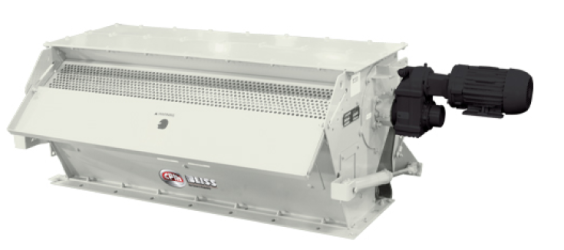
🌀 Rotary Pocket Feeder — A Controlled Flow Solution
A rotary pocket feeder uses a segmented rotor with pockets that fill and empty at a controlled, constant rate, delivering even material flow across the hammermill face.
🔧 Mechanical Working:
Material fills the rotor pockets uniformly.
Rotor turns at a fixed speed, acting as a volumetric dosing system.
Each pocket discharges an equal amount of feed directly to the hammermill inlet.
This results in a steady, pulse-free flow into the grinding chamber.
🧮 Engineering Effect:
Constant load → stable motor amperage curve.
Uniform impact → even hammer wear, less rocking on pins.
Balanced rotor → reduced vibration, longer bearing life.
Better grind quality and lower kWh/ton.
✅ Best suited for free-flowing materials like whole grains and coarsely ground meals.
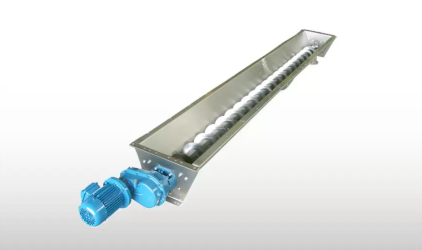
🪛 Screw Feeder — When Material Doesn’t Flow Easily
A screw feeder moves material forward using an auger. While useful for materials with poor flowability, its feed pattern is often pulsating, creating surges in the hammermill.
⚠️ Mechanical Impact:
- Uneven flow → torque fluctuations and amp spikes.
- Sudden loads → localized hammer wear and pin stress.
- Over time → imbalance, more downtime, and higher energy cost.🧭 Operator Insights
- Match feeder capacity with mill throughput.
- Maintain and inspect feeder pockets regularly.
- Avoid bridging at inlet — steady inflow is key.
- Use screw feeders only when material properties make rotary feeders impractical.
By getting the feeder right, you can:
Extend hammer and pin life
Cut energy costs
Improve mill performance
Reduce downtime and maintenance
-

Jegede Olajumoke
MemberOctober 18, 2025 at 8:45 am in reply to: The procedure for setting up a brooding circleThank you
-
Jegede Olajumoke
MemberOctober 18, 2025 at 8:27 am in reply to: Discussion Group Rules – PLEASE REVIEW AND ADHERE!Noted
-
Hight temperature stress
And low temperature stress also
-
Of course. Here is a shortened version of the key factors for selecting economically viable aquaculture species:
1. Can You Grow It?
· Fast growth & low FCR: Reaches market size quickly and uses feed efficiently.
· Hardy: Resists disease and tolerates variable water conditions.
· Available Seed: Reliable supply of juvenile fish (fingerlings).
2. Can You Sell It?
· Market Demand: Strong, consistent consumer demand.
· Production Cost: Sale price must be significantly higher than the cost of feed, fingerlings, and labor.
3. Is It Suitable for Your System?
· Fits Your Setup: Compatible with your ponds, cages, or tanks.
· Sustainable: Minimal environmental impact to ensure long-term operations.
In short: The best species is a hardy, fast-growing fish that you can produce cheaply for a market that wants to buy it.Of course. Here is a shortened version of the key factors for selecting economically viable aquaculture species:
1. Can You Grow It?
· Fast growth & low FCR: Reaches market size quickly and uses feed efficiently.
· Hardy: Resists disease and tolerates variable water conditions.
· Available Seed: Reliable supply of juvenile fish (fingerlings).2. Can You Sell It?
· Market Demand: Strong, consistent consumer demand.
· Production Cost: Sale price must be significantly higher than the cost of feed, fingerlings, and labor.3. Is It Suitable for Your System?
· Fits Your Setup: Compatible with your ponds, cages, or tanks.
· Sustainable: Minimal environmental impact to ensure long-term operations.In short: The best species is a hardy, fast-growing fish that you can produce cheaply for a market that wants to buy it.
-
Muhammad Ahmad
MemberOctober 18, 2025 at 7:32 am in reply to: Water Quality Management – Dissolved Oxygen (DO)Nice
Appreciated