

 Member
 JOSHUA KWENSIM ANDEZE
MemberForum Replies Created
-

Yes, moisture loss during storage can lead to changes in the nutritional profile of feed ingredients, primarily by increasing the concentration of other nutrients and potentially degrading certain vitamins through oxidation. While moisture loss concentrates nutrients like protein, it can also cause issues like vitamin destruction and can lead to a decrease in feed quality.
-
Good guidelines to be considered during feedmills?
-
Pre-grinding systems are generally more efficient in terms of grinding losses and energy consumption, particularly for large-scale operations with consistent formulas, while post-grinding systems offer greater flexibility and formula accuracy, especially for facilities that change recipes frequently. Pre-grinding reduces the load on the main grinding mill, leading to lower wear and tear and significant energy savings, but requires pre-ground material storage which can be inefficient for varied products. Post-grinding avoids the need for pre-storage but can be more energy-intensive and may result in higher grinding losses due to less ideal grinding conditions.
-

32–34°C during the first few days and reducing gradually 0.3C per day.
-
What are the major constraints of feed during milling
-
Adding 1–2% water at the mixer level is acceptable and advisable for hard pellet production to improve pellet quality and efficiency, but high water addition can negatively impact drying, cooling, and increase mold risk. Adding liquid mold inhibitors with the water is also recommended to control mold growth and maintain feed quality, especially if higher water levels are necessary or if a lower final moisture is desired
-
Thank you, well detailed
-
What is the protein requirements for monogastric animals
-

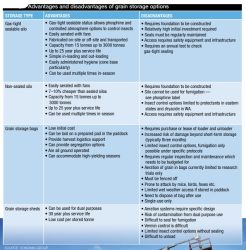
Gas-tight silos: Ideal for long-term storage and fumigation; require high investment and airtight sealing.
Non-sealed silos: Versatile and economical; not suitable for fumigation.
Storage bags: Flexible for short-term use; prone to damage, theft, and environmental risks.
Storage sheds: Durable and low-cost per tonne; difficult to fumigate and may pose contamination risks.
Overall: Each method involves trade-offs in cost, protection, and operational complexity—select based on specific storage needs.
-
When corn is stored at 15% moisture in silos under 35–49°C and 60–70% humidity, significant shrinkage occurs due to dry matter loss. The precise percentage varies, but is likely high because the conditions are well outside the recommended range for safe storage. A specific percentage for this extreme scenario is unavailable in research, as standard guidelines recommend lower temperatures and moisture to minimize loss.
-

Minimizing production downtime during equipment maintenance and cleaning is a critical goal for efficiency. Strategies focus on being proactive, efficient, and well-organized.
Here are key strategies:
1. Shift from Reactive to Proactive Maintenance
* Preventive Maintenance (PM): Develop and strictly adhere to a schedule for maintenance tasks (lubrication, inspections, part replacement) based on time or usage, before failure occurs. This turns unplanned downtime (expensive and disruptive) into scheduled, controlled downtime.
* Predictive Maintenance (PdM): Utilize technology like IoT sensors and data analytics to monitor equipment condition in real-time (e.g., vibration, temperature, energy consumption). This allows maintenance to be scheduled exactly when needed, maximizing component life while preventing unexpected breakdowns.
* Condition-Based Maintenance: A subset of PdM, this focuses on maintenance when indicators show a decline in performance or condition, not just on a fixed schedule.
2. Optimize Planning and Scheduling
* Integrate Maintenance and Production Schedules: Schedule maintenance and cleaning during planned downtime, like non-production shifts, changeovers, or low-demand periods, to minimize impact on output.
* Standard Operating Procedures (SOPs): Create clear, visual, and easy-to-follow SOPs for all maintenance, troubleshooting, and cleaning tasks. This ensures consistency and reduces time spent on figuring out what to do.
* Dedicated Cleaning/Maintenance Stations: Keep all necessary tools, spare parts, and cleaning supplies (including chemicals and PPE) organized and immediately accessible near the equipment. Shadow boards or mobile carts can help eliminate wasted time searching for items.
* Root Cause Analysis (RCA): After a breakdown or a lengthy downtime event, conduct a thorough RCA to understand the fundamental cause, not just fix the symptom. Implement permanent corrective actions to prevent recurrence.
3. Improve Equipment and Process Design
* Hygienic/Easy-to-Clean Design: Invest in equipment designed for quick and thorough cleaning (e.g., stainless steel, smooth surfaces, minimal crevices).
* Clean-in-Place (CIP) / Sterilize-in-Place (SIP): Implement automated cleaning systems where possible. CIP allows cleaning to occur without significant equipment disassembly, drastically reducing cleaning time.
* **Optimize Changeovers (SMED – Single Minute Exchange of Die): Apply lean principles to analyze and reduce the time required for product changeovers and cleaning. This often involves moving as many steps as possible to external (while the machine is running) activities.
* Modular Equipment: Use equipment with modular components that can be quickly swapped out for repair or cleaning while the main unit keeps running.
4. Invest in Staff Training and Empowerment
* Cross-Training: Train both operators and maintenance staff in troubleshooting and basic maintenance/cleaning of the equipment. Operators, being the first line of defense, should be empowered to perform quick checks and minor adjustments.
* Specialized Training: Ensure maintenance technicians are continuously trained on the specific, complex systems they manage.
* Total Productive Maintenance (TPM): Foster a culture where operators take ownership of their equipment’s daily maintenance and cleanliness (Autonomous Maintenance), freeing up maintenance staff for more complex repairs and proactive tasks.
5. Effective Inventory and Data Management
* Optimize Spare Parts Inventory: Maintain a well-organized inventory of critical spare parts, especially those with long lead times or high failure rates. Balance the cost of inventory with the cost of downtime.
* Track and Analyze Downtime: Accurately track all downtime events, including duration, reason/cause, and location. Analyzing this data (e.g., using metrics like MTBF – Mean Time Between Failure and MTTR – Mean Time To Repair) provides the necessary insights to focus improvement efforts.
* Computerized Maintenance Management System (CMMS): Use CMMS software to efficiently schedule, track, and manage all maintenance activities, work orders, and spare parts inventory.Minimizing production downtime during equipment maintenance and cleaning is a critical goal for efficiency. Strategies focus on being proactive, efficient, and well-organized.
Here are key strategies:
1. Shift from Reactive to Proactive Maintenance
* Preventive Maintenance (PM): Develop and strictly adhere to a schedule for maintenance tasks (lubrication, inspections, part replacement) based on time or usage, before failure occurs. This turns unplanned downtime (expensive and disruptive) into scheduled, controlled downtime.
* Predictive Maintenance (PdM): Utilize technology like IoT sensors and data analytics to monitor equipment condition in real-time (e.g., vibration, temperature, energy consumption). This allows maintenance to be scheduled exactly when needed, maximizing component life while preventing unexpected breakdowns.
* Condition-Based Maintenance: A subset of PdM, this focuses on maintenance when indicators show a decline in performance or condition, not just on a fixed schedule.
2. Optimize Planning and Scheduling
* Integrate Maintenance and Production Schedules: Schedule maintenance and cleaning during planned downtime, like non-production shifts, changeovers, or low-demand periods, to minimize impact on output.
* Standard Operating Procedures (SOPs): Create clear, visual, and easy-to-follow SOPs for all maintenance, troubleshooting, and cleaning tasks. This ensures consistency and reduces time spent on figuring out what to do.
* Dedicated Cleaning/Maintenance Stations: Keep all necessary tools, spare parts, and cleaning supplies (including chemicals and PPE) organized and immediately accessible near the equipment. Shadow boards or mobile carts can help eliminate wasted time searching for items.
* Root Cause Analysis (RCA): After a breakdown or a lengthy downtime event, conduct a thorough RCA to understand the fundamental cause, not just fix the symptom. Implement permanent corrective actions to prevent recurrence.
3. Improve Equipment and Process Design
* Hygienic/Easy-to-Clean Design: Invest in equipment designed for quick and thorough cleaning (e.g., stainless steel, smooth surfaces, minimal crevices).
* Clean-in-Place (CIP) / Sterilize-in-Place (SIP): Implement automated cleaning systems where possible. CIP allows cleaning to occur without significant equipment disassembly, drastically reducing cleaning time.
* **Optimize Changeovers (SMED – Single Minute Exchange of Die): Apply lean principles to analyze and reduce the time required for product changeovers and cleaning. This often involves moving as many steps as possible to external (while the machine is running) activities.
* Modular Equipment: Use equipment with modular components that can be quickly swapped out for repair or cleaning while the main unit keeps running.
4. Invest in Staff Training and Empowerment
* Cross-Training: Train both operators and maintenance staff in troubleshooting and basic maintenance/cleaning of the equipment. Operators, being the first line of defense, should be empowered to perform quick checks and minor adjustments.
* Specialized Training: Ensure maintenance technicians are continuously trained on the specific, complex systems they manage.
* Total Productive Maintenance (TPM): Foster a culture where operators take ownership of their equipment’s daily maintenance and cleanliness (Autonomous Maintenance), freeing up maintenance staff for more complex repairs and proactive tasks.
5. Effective Inventory and Data Management
* Optimize Spare Parts Inventory: Maintain a well-organized inventory of critical spare parts, especially those with long lead times or high failure rates. Balance the cost of inventory with the cost of downtime.
* Track and Analyze Downtime: Accurately track all downtime events, including duration, reason/cause, and location. Analyzing this data (e.g., using metrics like MTBF – Mean Time Between Failure and MTTR – Mean Time To Repair) provides the necessary insights to focus improvement efforts.
* Computerized Maintenance Management System (CMMS): Use CMMS software to efficiently schedule, track, and manage all maintenance activities, work orders, and spare parts inventory. -
The moisture content of raw materials for animal feed is not a single, fixed value; it varies significantly depending on the ingredient type, its processing, and storage conditions.
For most dry ingredients used in mixed feeds, the target and safe moisture content generally falls within a narrow range:
* Target Safe Range (Grains & Meals): 10\% to 13\%
This low range is critical because moisture levels above 14\% to 15\% significantly increase the risk of mold growth, mycotoxin production, and spoilage, reducing the feed’s quality and safety.
Typical Moisture Contents by Ingredient Type
| Ingredient Type | Common Examples | Typical Moisture Range (As-Fed) | Key Consideration |
|—|—|—|—|
| Cereal Grains | Corn, Wheat, Barley, Sorghum | 10\% to 14\% | Grains like corn should ideally be stored below 13.5\% moisture to prevent spoilage. |
| Protein Meals | Soybean Meal, Canola Meal, Fish Meal | 10\% to 12\% | These are heat-processed and dried, resulting in a consistently low moisture content. |
| Forages (Dry) | Hay, Straw, Dried Alfalfa | 10\% to 15\% | Hay is considered ‘dry’ but still retains an equilibrium moisture content of around 10\%. |
| Wet Byproducts | Silages, Wet Distillers Grains (WDG) | 35\% to 75\% | These materials are often defined by their low Dry Matter (DM) content (e.g., 25\% DM means 75\% moisture) and are used immediately or stored anaerobically. |
Importance of Moisture Control
Controlling the moisture content is a critical aspect of feed mill operations for several reasons:
* Storage Stability: High moisture leads to microbial activity (mold and yeast), which consumes nutrients and produces heat and potentially harmful mycotoxins.
* Nutrient Density: The nutrient composition of ingredients is generally expressed on a Dry Matter (DM) basis. Variations in moisture content directly affect the actual nutrient concentration of the feed “as-fed,” requiring adjustments during formulation.
* Processing: Moisture levels affect the efficiency of grinding and the quality of pellets. Dry materials (below 12\%) may require the addition of steam (moisture) during conditioning to achieve durable, high-quality pellets.
* Cost: Water adds weight, so controlling moisture content helps manage the true cost of purchased raw materials.The moisture content of raw materials for animal feed is not a single, fixed value; it varies significantly depending on the ingredient type, its processing, and storage conditions.
For most dry ingredients used in mixed feeds, the target and safe moisture content generally falls within a narrow range:
* Target Safe Range (Grains & Meals): 10\% to 13\%
This low range is critical because moisture levels above 14\% to 15\% significantly increase the risk of mold growth, mycotoxin production, and spoilage, reducing the feed’s quality and safety.
Typical Moisture Contents by Ingredient Type
| Ingredient Type | Common Examples | Typical Moisture Range (As-Fed) | Key Consideration |
|—|—|—|—|
| Cereal Grains | Corn, Wheat, Barley, Sorghum | 10\% to 14\% | Grains like corn should ideally be stored below 13.5\% moisture to prevent spoilage. |
| Protein Meals | Soybean Meal, Canola Meal, Fish Meal | 10\% to 12\% | These are heat-processed and dried, resulting in a consistently low moisture content. |
| Forages (Dry) | Hay, Straw, Dried Alfalfa | 10\% to 15\% | Hay is considered ‘dry’ but still retains an equilibrium moisture content of around 10\%. |
| Wet Byproducts | Silages, Wet Distillers Grains (WDG) | 35\% to 75\% | These materials are often defined by their low Dry Matter (DM) content (e.g., 25\% DM means 75\% moisture) and are used immediately or stored anaerobically. |
Importance of Moisture Control
Controlling the moisture content is a critical aspect of feed mill operations for several reasons:
* Storage Stability: High moisture leads to microbial activity (mold and yeast), which consumes nutrients and produces heat and potentially harmful mycotoxins.
* Nutrient Density: The nutrient composition of ingredients is generally expressed on a Dry Matter (DM) basis. Variations in moisture content directly affect the actual nutrient concentration of the feed “as-fed,” requiring adjustments during formulation.
* Processing: Moisture levels affect the efficiency of grinding and the quality of pellets. Dry materials (below 12\%) may require the addition of steam (moisture) during conditioning to achieve durable, high-quality pellets.
* Cost: Water adds weight, so controlling moisture content helps manage the true cost of purchased raw materials. -

This is actually helping farmers to save time and stress, reduced number of labour and also this makes it production easier and effective
-
General Avg value Dr, breed-to-breed difference will be there