

 Member
 Olaiya Oluseyi
MemberForum Replies Created
-

What are the fixed costs of feed mill operation?
-
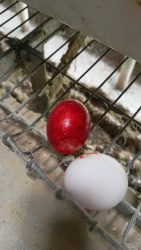
Analyse and write your views on the picture- Rare finding in 56 week old commercial layer flock. Flock size- 18000.
What are the possible DDx?
How do we treat if this is recurrent?
-
An effective feed milling process ensures consistent production of nutritionally balanced, high-quality feed at optimal cost and efficiency. The major components include:
Raw material → Grinding → Batching → Mixing → Conditioning → Pelleting → Cooling → Crumbling/Screening → Coating → Packaging → Storage
Sakthivel V P
-

One of the most sensitive indicators is performance efficiency, whether is growth or laying egg performance. Modern birds are highly efficient at conversing feed into product and any disease will cause an impact on production efficiency. When animal get sick non-specific signs include behavioral changes, and depending on the disease and severity reduction in feed intake, diarrhea, coughing or wheezing, respiratory distress, fever, somnolence, reduced activity, and more.
-
Make sure the animal facilities, environmental management, husbandry, feed and water quality, and a health program are adequate for your poultry production type
-

Muddasar
MemberSeptember 16, 2025 at 7:18 pm in reply to: Effective Strategies for Subclinical CoccidiosisI’ve observed noticeable economic losses in broilers due to subclinical coccidiosis — what practical measures have you found most effective in minimizing its impact?
-
Muddasar
MemberSeptember 16, 2025 at 7:12 pm in reply to: Best feed additives for improving FCR in broilersWhat’s the most effective feed additive you’ve used to improve FCR in broilers? <em data-start=”330″ data-end=”451″ style=”font-size: inherit;”>Keen to learn from others’ experiences.
-

A good question – the answer is, either is just as good as the other IF processed correctly. The difference between solvent extracted SBM and Expeller extracted SBM is in the process that removes (extracts the lipid) – Solvent crushes the beans and passes a solvent (usually hexane) through the flakes which collects the lipid and separates it from the flakes, which are then dried and cooled resulting in 46-48% protein SBM – Expeller usually relates to mechanical squeezing of the beans where the mechanical pressure releases the lipid from the beans which is then collected; the resulting meal will retain 2-4% lipid resulting in a lower protein (42-44%) SBM; it is important to expose the meal to some heat treatment as the temperature rise during expelling may not be enough to inactivate the trypsin inhibitors and some other antinutritional factor. Another form of expelling is fullfat extrusion where the lipid is not removed during the extrusion/expelling process but rather reabsorbed into the meal yielding a SBM with a protein value of 36-38% and lipid/fat value of 18%. Any of these products when correctly processed provide an excellent ingredient to be used in properly formulated diets for poultry.
-
It is a good question – unfortunately there is not “one” answer. Remember the moisture level in the conditioned fed going into the pellet chamber should/must not exceed 17.5% (maybe 18% depending on ingredients). If maize inclusion rate in formula is >70% and corn moisture level is >17% the staring moisture of your feed is going to be very close to that limit of 17% in the conditioned feed entering the pellet chamber. Go to the Documents Tab and look in the Pelleting PDF – there is a chart that relates moisture content added by steam and the resulting temperature increase. If steam is 100% vapor (doubtful) there will be a 16.1 degree increase in mash temperature for each 1% moisture gain; so if the starting moisture in the mixed feed is <15% you can add 2% moisture and 32 degrees of temperature increase. HOWEVER, if steam quality is only 80% vapor and 20% liquid water the temperature increase will only be 26 degrees. Thus it is very important to know the moisture in the mixed feed. The “answer” is you add as much steam as possible before creating a ‘choke’.
-

Feed mill complexity means the level of difficulty and advancement in operating a feed mill
-
What does the colour of the droppings (faeces) in poultry indicate about its health??
– Dr Malathi
-
Proper calcium and phosphorus availability
addition of lime stone about 90KG in one Ton of feed
-
Knife adjustment role for better pellet formation is this that if adjustment is not fine the particle size will effect and pellets made are not of fine size