
 Member
 Lina Paola Pardo Quevedo
MemberForum Replies Created
-

Yes, some toxin binders can adsorb pesticide residues, but only non-specific binders like activated charcoal and organophilic clays show significant binding.
Examples of Toxin Binders with Reported Pesticide Binding
Activated Charcoal → Binds lindane, aldrin, malathion, chlorpyrifos.
Organophilic Bentonite/Zeolite → Adsorbs DDT, endosulfan, atrazine.
Cholestyramine Resin → Used in lab studies to trap chlorpyrifos and dieldrin.
Yeast Cell Walls → Limited binding reported for organophosphates.
-
The dietary Ca:P ratio should be around 10:1 in laying hens. High protein intake → produces more metabolic acids (sulphates, urates). This acid load needs to be buffered, increasing the requirement for calcium. If Ca is excessive with marginal protein:
Eggs may have stronger shells, but egg number drops because protein (amino acids) is limiting. Higher protein deposition (in eggs and tissues) requires proportionally higher P to support energy transfer and skeletal integrity. If protein is high but P is deficient: Egg production suffers due to impaired energy metabolism, and skeletal demineralization occurs.
-

Thank you Rahul, this is helpful! 👍
-
If drop in egg production: Go for viral cause and check serology for IB, ND and EDS.
If egg production is marginal, then there may be salpingitis (oviduct and cloacal injuries) possibly due to coli infections. -

Good information.
-

Yes, we can give live vaccine of IB for the disease prevention
-
What are the fixed costs of feed mill operation?
-
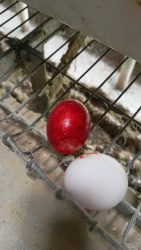
Analyse and write your views on the picture- Rare finding in 56 week old commercial layer flock. Flock size- 18000.
What are the possible DDx?
How do we treat if this is recurrent?
-
An effective feed milling process ensures consistent production of nutritionally balanced, high-quality feed at optimal cost and efficiency. The major components include:
Raw material → Grinding → Batching → Mixing → Conditioning → Pelleting → Cooling → Crumbling/Screening → Coating → Packaging → Storage
Sakthivel V P
-

One of the most sensitive indicators is performance efficiency, whether is growth or laying egg performance. Modern birds are highly efficient at conversing feed into product and any disease will cause an impact on production efficiency. When animal get sick non-specific signs include behavioral changes, and depending on the disease and severity reduction in feed intake, diarrhea, coughing or wheezing, respiratory distress, fever, somnolence, reduced activity, and more.
-
Make sure the animal facilities, environmental management, husbandry, feed and water quality, and a health program are adequate for your poultry production type
-

Muddasar
MemberSeptember 16, 2025 at 7:18 pm in reply to: Effective Strategies for Subclinical CoccidiosisI’ve observed noticeable economic losses in broilers due to subclinical coccidiosis — what practical measures have you found most effective in minimizing its impact?