

 Member
 Lina Paola Pardo Quevedo
MemberForum Replies Created
-

Best supplements for multivitamin substitute
-
The correct mixing time, according to Conrado (Don) Bulanhagui during a recent SEC Asia Feed Milling Intermediate Course, is not simply what the mixer manufacturer recommends—it is the time needed to achieve a coefficient of variation (CV) of less than 10%, ideally below 5%, which indicates excellent mix uniformity.
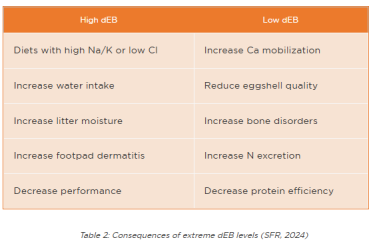
Rules-of-thumb for mixing times are shown in the attached table.
A dry mix cycle of 30–60 seconds is recommended before adding liquids to prevent lumps, especially since liquids like premixes are usually added last (ingredients are weighed in descending order of inclusion). The pump capacity should allow spraying liquids in under 60 seconds to maximize mixing time afterward. Wet mix time starts after all liquids have been added. Test CV to verify both dry mix and wet mix times are adequate.
Ultimately, the goal is achieving a consistent mix measured by CV rather than relying on fixed mixing times alone. Adjust mixing time based on CV testing results to ensure feed quality and uniform nutrient distribution.
-
The goal of mixing is to evenly distribute all components, resulting in a nutritionally balanced feed. Mixing uniformity is typically measured by the coefficient of variation (CV%) of a specific nutrient or ingredient (see attached Table).
Key insights for better mixing results batch after batch:
Generally mixing uniformity increases with mixing time (<5% CV is ideal).
Uniform particle size among the ingredients facilitates better mixing. Large variations in particle size make uniform dispersion harder to achieve. A practical guideline suggests that the difference in particle size between feed components should not exceed approximately 3 mm. When particle sizes vary beyond this threshold, segregation tendencies increase markedly. Larger particles, due to their greater mass and inertia, tend to separate from smaller, lighter particles during mixing and handling. This segregation impedes uniform distribution, especially of micro-ingredients, which often have much finer granulation compared to base feedstuffs such as ground grains.
For example, in layer mash feeds, the wide range of particle sizes—from coarse grains to fine additives—makes it challenging to achieve a low coefficient of variation (CV) in the final product. This heterogeneity can result in inconsistent nutrient delivery and reduced feed efficiency.
The order in which ingredients are added matters – add dry ingredients first before incorporating liquids. Adding liquid ingredients too early can cause lumping, leading to uneven distribution of nutrients such as fats.
Add liquids through multiple application points for optimal dispersion.
Spray nozzles should be positioned and angled to direct liquids into the active mixing zone – typically the “throw” or fold of the paddles—where particles are suspended and mixed thoroughly.
Avoid overfilling the mixer beyond its recommended capacity to ensure proper movement and mixing of ingredients.
Adding baffles and agitators can significantly lower the coefficient of variation (CV) in feed mixers by improving mixing uniformity through enhanced material movement and flow patterns.
Regularly inspect the mixer for worn components or mechanical issues that can affect mixing efficiency.
Use tracers like salt or microtracers to evaluate uniformity during mixer testing to directly measure CV and guide adjustments.
-

Pheasants are colorful, ornamental game birds prized for their meat and beauty, often raised in aviaries or for hunting. Guinea fowl are hardy, speckled birds known for pest control, loud alarms, and lean, flavorful meat.
-
Inadequate levels of protein, calcium, phosphorus, and essential vitamins can impair egg formation.
-
-

Yes, absolutely right.
-
Exactly. Genetics set the baseline for shell colour, but environmental factors, such as stress, disease (especially IB), age, and certain drugs, can significantly influence pigment deposition. It’s the variation within a flock that often signals deeper issues worth investigating.