

 Member
 Dr. BISHNU HARI
MemberForum Replies Created
-

Grain Temperature Difference (ΔT) in Silo Storage
Definition:
Grain Temperature Difference, denoted as ΔT, refers to the difference between the temperature of the stored grain mass and the surrounding ambient air temperature.
This parameter is a key indicator of the thermal condition and biological activity inside the silo.
Practical Monitoring Guidelines
Ø Install temperature cables at different heights and zones inside the silo.
Ø Record grain temperature and ambient temperature daily or weekly.
Ø Investigate if ΔT exceeds 5°C, and aerate immediately.
Ø Keep ΔT < 3°C for long-term safe storage.
Ø Maintain logbook or digital monitoring system for trend analysis.
Sakthivel V P
-

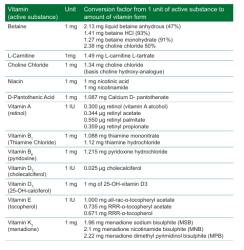
This table outlines standardized conversion factors between active substances and their corresponding vitamin forms, facilitating accurate nutrient quantification in feed and premix formulations. These values are essential for ensuring compliance, efficacy, and consistency across diverse ingredient sources.
Key Conversion Highlights
-
Betaine
-
1 mg active = • 2.13 mg liquid betaine anhydrous (47%) • 1.41 mg betaine hydrochloride (70%) • 2.38 mg choline chloride (60%)
-
-
L-Carnitine
-
1 mg active = 1.49 mg L-carnitine L-tartrate
-
-
Choline Chloride
-
1 mg active = 1.34 mg choline chloride (based on choline hydroxyl analogue)
-
-
Niacin
-
1 mg active = 1 mg nicotinic acid or 1 mg nicotinamide
-
-
D-Pantothenic Acid
-
1 mg active = 1.087 mg calcium D-pantothenate
-
-
Vitamin A
-
1 IU = • 0.3 μg retinol (retinyl acetate) • 0.344 μg retinyl palmitate
-
-
Vitamin B₁ (Thiamine)
-
1 mg active = • 1.27 mg thiamine mononitrate • 1.13 mg thiamine hydrochloride
-
-
Vitamin B₂ (Riboflavin)
-
1 mg active = 1.19 mg riboflavin 5’-phosphate sodium
-
-
Vitamin B₆ (Pyridoxine)
-
1 mg active = 1.21 mg pyridoxine hydrochloride
-
-
Vitamin D₃ (Cholecalciferol)
-
1 IU = 0.025 μg 25-OH-vitamin D₃
-
-
Vitamin E
-
1 IU = • 0.67 mg all-rac-alpha-tocopheryl acetate (25-OH-calciferol) • 1.1 mg RRR-alpha-tocopheryl acetate • 1.49 mg RRR-alpha-tocopherol • 2.22 mg all-rac-alpha-tocopherol
-
-
Vitamin K₂ (Menadione)
-
1 mg active = • 1.92 mg menadione sodium bisulfite (MSB) • 2.66 mg menadione nicotinamide bisulphite (MNB) • 2.22 mg menadione dimethyl pyrimidinol bisulphite (MPB)
-
-
-
Reduction of Pathogenic Bacteria in Animal Feed Using Organic Acids
Organic acids are increasingly utilized in feed safety management due to their proven efficacy in reducing Salmonella and other pathogenic bacteria in feed and feed mills. Through dietary acidification, they enhance environmental hygiene by safeguarding raw materials, compound feeds, and equipment from zoonotic agents. Their residual antimicrobial activity further mitigates recontamination risks.
Application in Feed and Water
Organic acids and their blends are applied via feed and water to sanitize and modulate gut microflora, thereby improving feed efficiency and reducing microbial load. Efficacy varies by substrate:
-
Pelleted and compound mash feeds: up to 2.5 log₁₀ reduction
-
Rapeseed meal: ~1 log₁₀ reduction
-
Soybean meal: <0.5 log₁₀ reduction
Formic and propionic acids, alone or with sodium formate, demonstrate the highest impact.
Targeting Salmonella spp.
The EFSA Panel on Biological Hazards identifies Salmonella spp. as a key microbial hazard in protein-rich and pelleted feeds. Acid blends—particularly formic:propionic (80:20)—show significant reductions:
-
Iba & Berchieri (1995): >1000-fold reduction in S. Typhimurium within 7 days
-
Field trials with 0.5% formic acid: Salmonella-positive breeder feed dropped from 4.1% to 1.1%
Strain-specific acid tolerance was observed, with S. Infantis being most resilient, followed by S. Putten, S. Senftenberg, and S. Typhimurium.
Broader Antimicrobial Spectrum
Organic acids also inhibit E. coli, Listeria monocytogenes, and Clostridium spp., though these are less commonly feedborne. Experimental findings include:
-
5 mmol/L propionic acid → transient bacteriostasis (30 min)
-
0.5–0.7 mol/L formic/propionic acid → ~90% E. coli mortality within 3 hours
-
Combined acids exhibit synergistic effects, notably in fish meal
-
-
<b data-start=”159″ data-end=”234″><strong data-start=”163″ data-end=”234″>Reduction of Pathogenic Bacteria in Animal Feed Using Organic Acids
Organic acids have gained increasing attention in feed safety management due to their ability to reduce <strong data-start=”340″ data-end=”354″>Salmonella and other pathogenic bacteria in feed and feed mills. Dietary acidification with organic acids contributes to environmental hygiene by protecting raw materials, compound feeds, and equipment from zoonotic agents. Their <strong data-start=”574″ data-end=”607″>residual antimicrobial effect also prevents recontamination.
<b data-start=”640″ data-end=”676″><strong data-start=”645″ data-end=”676″>Proposed Use in Animal Feed
Organic acids and their blends are used both in feed and water to sanitize and modulate gut microflora, improving feed efficiency and reducing bacterial contamination. The efficacy of acid treatments depends on the feed type. Studies show that <strong data-start=”921″ data-end=”950″>formic and propionic acid (alone or combined with sodium formate) achieve the highest reduction in <strong data-start=”1024″ data-end=”1078″>pelleted and compound mash feeds (up to 2.5 log₁₀), moderate effects in <strong data-start=”1100″ data-end=”1127″>rapeseed meal (1 log₁₀), and limited effects in <strong data-start=”1152″ data-end=”1181″>soybean meal (<0.5 log₁₀).
<b data-start=”1184″ data-end=”1221″><strong data-start=”1189″ data-end=”1221″>Combating Salmonella in Feed
The <strong data-start=”1226″ data-end=”1262″>EFSA Panel on Biological Hazards recognizes <em data-start=”1274″ data-end=”1291″>Salmonella spp. as a major microbial hazard in animal feeds, especially in protein-rich ingredients and pelleted feeds prone to cross-contamination. Studies demonstrate that formic acid and blends with propionic acid (typically 80:20 ratio) significantly reduce <em data-start=”1538″ data-end=”1550″>Salmonella counts. For example, <em data-start=”1572″ data-end=”1596″>Iba & Berchieri (1995) reported a <strong data-start=”1608″ data-end=”1632″>>1000-fold reduction in <em data-start=”1636″ data-end=”1652″>S. Typhimurium viability within seven days using formic–propionic acid blends. Large-scale trials using <strong data-start=”1742″ data-end=”1762″>0.5% formic acid reduced <em data-start=”1771″ data-end=”1783″>Salmonella-positive breeder feed samples from <strong data-start=”1819″ data-end=”1835″>4.1% to 1.1%.<br data-start=”1836″ data-end=”1839″> Among strains, <em data-start=”1854″ data-end=”1867″>S. Infantis showed the highest acid tolerance, followed by <em data-start=”1915″ data-end=”1926″ data-is-only-node=””>S. Putten, <em data-start=”1928″ data-end=”1944″>S. Senftenberg, and <em data-start=”1950″ data-end=”1966″>S. Typhimurium.
<b data-start=”1969″ data-end=”2003″><strong data-start=”1974″ data-end=”2003″>Effects on Other Bacteria
Organic acids are also active against <strong data-start=”2042″ data-end=”2053″>E. coli, <strong data-start=”2055″ data-end=”2081″>Listeria monocytogenes, and <strong data-start=”2087″ data-end=”2107″>Clostridium spp., though feed is a less common source of these pathogens. Experimental data show concentration-dependent inhibition of <em data-start=”2226″ data-end=”2235″>E. coli:
<ul data-start=”2239″ data-end=”2509″>
<strong data-start=”2241″ data-end=”2268″>5 mmol/L propionic acid → temporary bacteriostasis (30 min).
<strong data-start=”2310″ data-end=”2352″>0.5–0.7 mol/L formic or propionic acid → 90% bacterial death within 3 hours.
Combined use of formic and propionic acids exhibits <strong data-start=”2447″ data-end=”2483″>synergistic antimicrobial action, especially in fish meal.
-
Yes, by DEB
-
Detailed explanation.
-

Egg-binding is a serious, potentially life-threatening condition where a female animal, such as a bird, is unable to pass an egg. The egg gets stuck in the oviduct or cloaca, which can be caused by factors like an abnormally large or shaped egg, nutritional deficiencies (especially calcium), age, stress, or infection. Early detection is crucial, and symptoms include straining, lethargy, a swollen abdomen, and a penguin-like posture.
-

egg bound is a condition in which hen is straining and unable.to lay egg.
it can be due to:
premature laying,
old age of flock,
large egg size,
obesity,
in spring and summer over light stimaulation,
unbalanced feed,
Calcium deficiency,
calcium tetany,
overfeeding ,
trauma,
infection of oviduct,
-

· Debate the statement: “For Mycoplasma, perfect biosecurity is the only effective vaccine.”
· What are the most common, and often overlooked, biosecurity breaches that lead to Mycoplasma introduction on a farm?
-
Yes need to be discussed
-
what do you understand by Egg Bound condition?
What are the predisposing factors, possible preventive and treatment strategies?
– Dr Malathi
-
Appreciate your responses with detailed explanations.
However, I suggest to keep your answers short and crisp, for a quick glance by all.
Thanks
Dr Malathi
-
Noted thanks
-
-
By following the guidelines of the parent breed company about feeding and management.
-
India
MemberOctober 30, 2025 at 10:00 am in reply to: Safety Protocols for Silo Operation & FumigationGreat share very informative
Sakthivel V P